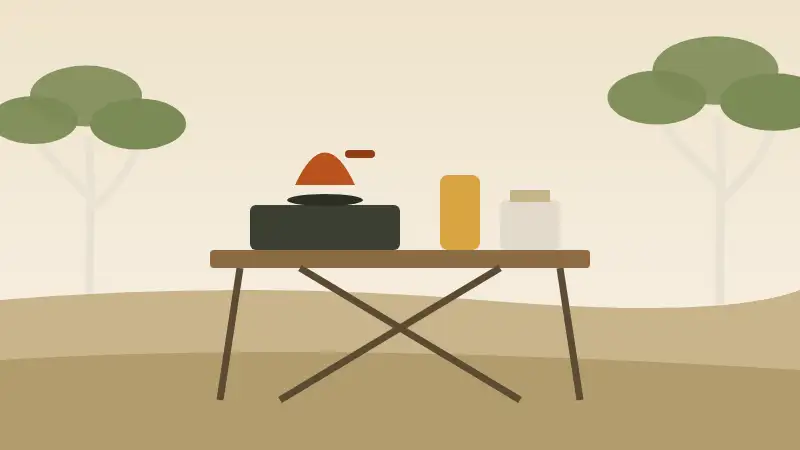
The short answerA good camp kitchen needs a stable two-burner stove and fuel, one pot, one frypan and a kettle, basic utensils, a way to keep food at 5°C or below, a wash-up setup and plenty of water. Keep it in one or two labelled tubs so it’s always packed and ready, and set it up downwind of your tent, out of the wind and away from anything flammable.
Cooking is where a lot of camping happiness comes from, and where a lot of first-trip frustration starts. This guide covers the camp kitchen essentials that actually earn their space, the safety rules for gas in Australia, and how to keep food cold and safe. It’s part of our beginner’s guide to camping in Australia.
Stove and fuel
| Stove type | Fuel | Good for | Watch out for |
|---|---|---|---|
| Two-burner LPG stove | Refillable LPG cylinder via hose and regulator | Car camping, families, real cooking | Bulkier; check hose and fittings each trip |
| Single butane cartridge stove | Disposable butane canisters | Quick weekends, boiling water | Overheating if used with oversized pots or in enclosed spaces |
| Lightweight canister stove | Screw-on gas canisters | Hiking, a backup burner | Small pots only; less stable |
On Total Fire Ban days, rules for gas stoves and barbecues vary by state and can include extra conditions or bans. Check your state fire service before you cook; we cover fire danger in our beginner’s guide.
Cookware and utensils
- One medium pot with a lid, and one frypan (a heavy-based or cast iron pan spreads heat better on small burners)
- Kettle or billy
- Chopping board and a sharp knife with a cover
- Spatula, tongs, large spoon, ladle
- Can opener, bottle opener, scissors
- Plates, bowls, mugs and cutlery for everyone (enamel or melamine travel well)
- Measuring cup and a small grater
- Foil, zip-lock bags and containers for leftovers
- Matches or a lighter in a waterproof bag, even if your stove has an igniter
Keeping food cold and safe
Food safety rules don’t change at camp. Food Standards Australia New Zealand advises keeping cold food at 5°C or below, which is harder than it sounds in an Australian summer.
- Esky: pre-chill it, fill it (empty space warms up), use block ice or frozen bottles, keep it shaded and open it rarely. A separate drinks esky keeps the food one closed.
- 12V fridge: holds a steady temperature with no ice, but needs power. Our camping power setup guide explains how to size a battery or portable power station to run one.
- A cheap fridge thermometer tells you whether food is actually staying cold.
- Plan meals so meat and dairy are eaten in the first days, and pack shelf-stable food for later.
Water and washing up
- A water container with a tap (many campgrounds have no drinkable water), plus extra in hot weather
- A collapsible wash-up tub or two (wash and rinse)
- Biodegradable detergent, a scrubber and tea towels
- Hand sanitiser and paper towel
- Rubbish and recycling bags: take everything home
Tip wash-up water away from creeks, lakes and campsites, and strain out food scraps first so you don’t attract animals.
Setting up the kitchen
- Use a sturdy folding table at a comfortable height; cooking on the ground is harder and less safe.
- Shield the stove from wind with its built-in wind guards or by placing it in the lee of the car; don’t wrap a butane stove in anything that traps heat.
- Keep the kitchen downwind of the tent, clear of overhanging branches and dry grass.
- Put a light over the cooking area before dark.
- Pack food away at night; possums and birds raid anything left out.
See how the kitchen fits into a whole campsite in our weekend car camping setup.
Camp kitchen checklist
| Cooking | Food storage | Cleaning |
|---|---|---|
| Stove + fuel (and a spare) Lighter or matches Pot, frypan, kettle Utensils and knife Chopping board Plates, bowls, mugs, cutlery | Esky or 12V fridge Ice or frozen bottles Fridge thermometer Containers and zip-lock bags Foil Water container | Wash-up tubs Biodegradable detergent Scrubber, tea towels Hand sanitiser Paper towel Rubbish bags |
Camp kitchen FAQ
Can I use a gas stove during a Total Fire Ban?
It depends on the state and the conditions; some states allow gas cooking with restrictions, others don’t in certain areas. Always check your state fire service on the day before cooking.
How long will ice last in an esky?
It varies hugely with the esky, the weather and how often you open it. Pre-chilling, block ice, shade and a separate drinks esky all help it last longer. For longer trips, a 12V fridge is more reliable.
Is it safe to cook in a tent vestibule?
No. Gas stoves produce carbon monoxide and are a fire risk in any enclosed or semi-enclosed space. Cook outside in the open air.